Nursery safety and baby sleepwear
What to Look For in a Wearable Sleep Sack for the Nursery
A wearable sleep sack can add a layer of warmth without placing a loose blanket in a baby’s sleep space. The right choice is less about decorative details than about fit, fabric, construction, and how the garment suits your child’s age and the room’s temperature.
Published October 26, 2026
In a nursery, small decisions gather around a simple daily ritual: dressing a baby for sleep. A soft garment may look like a blanket with armholes, but a wearable sleep sack is designed to stay on the child rather than lie loose in the sleep space. That difference can make it an appealing alternative to adding bedding. It does not, however, replace safe-sleep practices or guarantee uninterrupted sleep.
When comparing a wearable sleep sack, begin with the details that affect how it sits on the body: the size range, neck and arm openings, room for the hips and legs, and the way it closes. Then consider the material, warmth rating if one is provided, and care instructions. A sleep sack should fit the child using the manufacturer’s guidance—not be chosen with the expectation that a baby will grow into it.
First, understand what a sleep sack is—and is not
A wearable sleep sack, sometimes called a sleeping bag or wearable blanket, is a garment intended to be worn over sleep clothes. Most have a torso section and a roomy lower portion that allows the legs to bend and move. Some styles are sleeveless; others have sleeves. Designs vary, so the product name alone does not tell you whether a particular model is appropriate for a specific child or situation.
Unlike a conventional blanket, a wearable sleep sack is attached to the child’s clothing and is not meant to be pulled over the face or kicked away in the same way a loose layer might be. Still, safe sleep depends on the entire sleep setup. Follow current guidance from your child’s healthcare professional and recognized public-health organizations: place babies on their backs for every sleep, use a firm, flat sleep surface intended for infants, and keep the sleep area clear of loose bedding and other soft objects. A sleep sack is an optional clothing layer, not a substitute for those fundamentals.
Check that the product is a wearable garment made for sleep and follow its age, size, and use instructions. It is not the same as a swaddle that restricts a baby’s arms or movement. If a child is swaddled, caregivers should follow current safe-sleep advice and stop swaddling as soon as the baby shows signs of trying to roll. A sleep sack that leaves the arms free may be considered instead, provided it fits correctly and is suitable for the child.
Fit: secure at the openings, roomy where it matters
Fit is the first practical test. Use the manufacturer’s sizing chart, which may take weight, length, or age into account. Age alone can be a poor guide: babies grow at different rates, and two children of the same age may need different sizes. If the maker gives a weight range, compare it with your child’s current weight rather than estimating from clothing size.
The neck opening should not be so wide that the baby could slip down into the garment. Arm openings should also be appropriately sized: loose enough for comfortable movement, but not so large that the garment rides up toward the face. A well-fitting sleep sack should stay in its intended position while allowing the baby to move freely.
Look for room through the body and lower portion. Babies need space to flex their legs and move their hips; a sleep sack should not bind, compress, or hold the legs straight. A roomy shape is not the same as an oversized fit. If the openings seem too large, the sack rides up, or the child’s body appears to slide inside it, stop using it and check the size guidance. Do not modify the garment or add clips, ties, or other homemade fasteners to make it fit.
Consider how the garment will sit over the clothes your baby normally wears for sleep. A sack that fits over a thin layer may feel restrictive over thicker pajamas. On the other hand, purchasing an unnecessarily large size for future use can create a poor fit now. The best size is the one the product maker recommends for the child’s present measurements.
Fabric and warmth: choose for the whole sleep environment
Fabric affects how a sleep sack feels against the skin, how it behaves in the wash, and how much warmth it adds. Cotton is a common option because it is soft, familiar, and available in a range of weaves and weights. Organic cotton describes how the fiber was produced under a particular standard; it does not, on its own, establish that a garment is safer for sleep or suited to every temperature. Consider the complete construction and the maker’s care and use instructions.
Breathable fabric can feel comfortable, but no material should be treated as a guarantee against overheating. The sleep sack’s thickness, lining, sleeves, and any stated warmth or TOG rating all matter, as do the baby’s pajamas and the room conditions. If a manufacturer provides a TOG rating, use its guidance to compare warmth and determine appropriate layering. Avoid assuming that two sacks with similar-looking fabric will provide the same insulation.
Dress the baby with the room in mind, and check the child rather than relying only on the temperature of hands or feet, which can often feel cooler. If the baby’s chest or back feels hot or sweaty, or the baby looks flushed or uncomfortable, consider whether the clothing layers or room conditions are too warm and seek professional guidance if you are concerned. Do not add a hat indoors for sleep unless a clinician has advised it for a specific reason.
Labels such as “all-season,” “breathable,” or “natural” can be useful starting points, but they are not a substitute for concrete product information. Look for fabric composition, lining details, warmth guidance, and a clear description of intended use. A simple, lightweight garment with instructions you can follow may be more useful than a complicated design whose warmth is difficult to judge.
Zippers, seams, and everyday construction
A zipper can make dressing and diaper changes easier, especially during the quiet hours when lights are low and everyone is tired. Check where it opens and whether the closure allows access without requiring the entire garment to be removed. Some designs have a zipper that opens from the bottom; others use a different arrangement. Choose the construction that works for your routine while following the maker’s instructions.
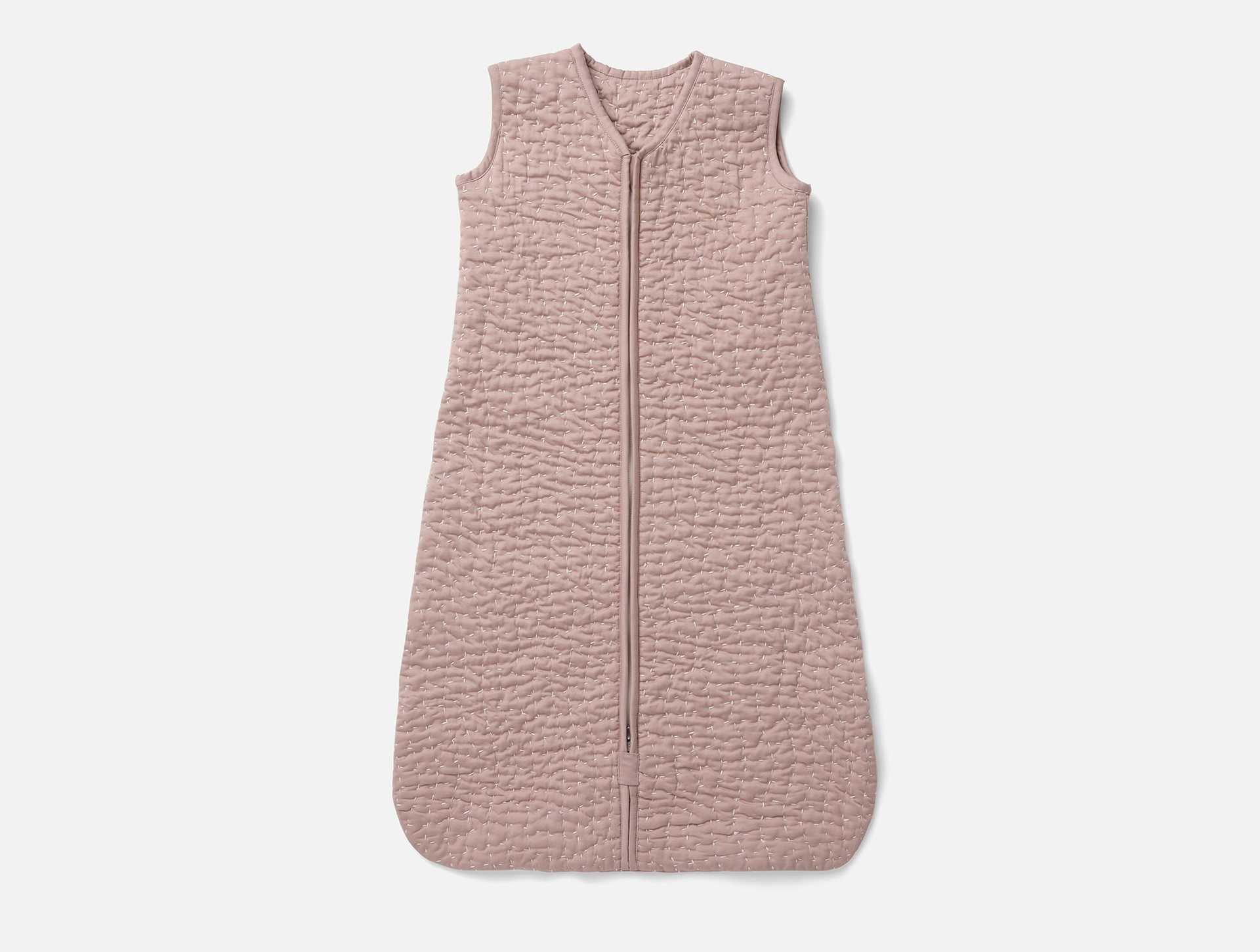
Inspect the zipper area and other fastenings. A zipper guard or fabric cover can help keep the hardware from resting directly against the baby’s skin or catching nearby fabric. Look for smooth seams, secure stitching, and edges that lie flat. Decorative embroidery or textured panels may be attractive, but check that embellishments are firmly attached and that the garment’s finish does not interfere with movement or comfort.
Before each use, take a moment to look over the sack. A damaged zipper, a loose seam, a stretched opening, or a missing fastener can change how the garment fits. Retire it if it is torn or no longer closes securely. Wash and maintain the product as directed; high heat or unsuitable detergents can affect some fabrics and finishes.
A note on organic cotton and certifications
Families may prefer organic cotton for environmental, sourcing, or personal reasons. If a product states that it is certified, check which standard is named and what the certification covers. A textile certification can provide information about fiber sourcing or production processes, but it does not assess every aspect of an infant sleep product, and it does not replace correct sizing or safe-sleep guidance.
For example, the Pebbled Handstitched Organic Snuggle Sack is described as being made from organic cotton sateen, with arm openings and a covered front zipper. The product information also notes GOTS and Fair Trade Factory certification. Those details may help shoppers compare textile composition and construction. As with any sleep garment, caregivers should check the available size and care information, confirm that the fit is appropriate for the child, and use it only as directed. A product description cannot establish whether a particular size suits an individual baby.
Care instructions are part of the decision
A sleep sack is likely to be washed often. Spit-up, drool, and ordinary nursery life make easy care more than a convenience. Before buying, look for clear washing and drying instructions, and consider whether you can follow them consistently. A garment that requires special treatment may be less practical for a busy household than one that can be washed routinely according to its label.
Check whether the fabric may shrink, whether a zipper should be fastened before washing, and whether the maker recommends a gentle cycle or low-heat drying. Keeping the care label available can help prevent guesswork. If you have more than one sack, rotating them can make it easier to have a clean, dry option ready without extending use of a garment that is damp or soiled.
When a sleep sack may not be suitable
Do not use a wearable sleep sack that is too large, damaged, or not intended for your child’s age or size. Follow restrictions on the label, and ask your child’s healthcare professional if your baby has a medical condition, special care needs, or a temperature-regulation concern. A sleep sack should not be used in a way that limits breathing or movement, and it should never be combined with extra loose bedding in the sleep space.
Weighted sleep products deserve particular caution. Do not use weighted blankets, weighted sleep sacks, or other weighted products for an infant unless current authoritative guidance and your child’s clinician specifically support a use for that child. Products marketed for calming or longer sleep do not override safe-sleep recommendations. If a baby seems uncomfortable or unusually warm, remove unnecessary layers and contact a healthcare professional for advice when needed.
For babies who are beginning to roll, use an arms-free sleep garment and follow current safe-sleep recommendations. Avoid products that restrain the arms, chest, or body in a way that could limit movement, and do not use a swaddle once the baby shows signs of attempting to roll. When in doubt about whether a particular product is a swaddle, a sack, or another type of sleepwear, consult the manufacturer’s instructions and your healthcare provider.
A practical comparison checklist
Product pages can make similar garments look interchangeable. A short checklist helps bring the decision back to the details that matter:
- Size: Does the manufacturer provide a clear size chart, and does your child fall within its stated range?
- Openings: Do the neck and arm openings appear appropriately sized, with no risk of the baby slipping inside?
- Movement: Is there room for the hips and legs to bend and move comfortably?
- Material: Are the fiber content, lining, and construction clearly described?
- Warmth: Is a warmth rating or layering guidance provided, and does it suit the room and sleep clothes?
- Closure: Is the zipper or fastening secure, smooth, and practical for changes?
- Care: Can the garment be cleaned according to instructions that work for your household?
- Use: Is it an arms-free wearable sleep garment, and are its age, size, and safety instructions clear?
The nursery is more than a garment
Choosing baby sleepwear can feel like a high-stakes exercise because the subject is sleep, and sleep is precious. The clearest way to approach a purchase is to separate the garment’s conveniences from the sleep environment’s essentials. A wearable sleep sack may offer a steady layer and simplify bedtime dressing. It cannot make an unsafe sleep space safe, and it cannot replace attentive care or professional advice.
Keep the sleep surface firm, flat, and clear of loose items. Place the baby on their back for sleep, and follow current recommendations from trusted health authorities and your child’s clinician. Use the sack according to its label, choose the correct size, and dress the baby with the room’s conditions in mind. If the garment’s fit, warmth, or intended use is unclear, pause and seek an answer before using it.
In the end, a useful wearable sleep sack is not defined by the most elaborate trim or the longest list of claims. It is a well-fitting, well-understood layer made for the child’s current size, easy to care for, and used within a safe sleep routine. That combination lets a simple nursery item do its modest job: provide clothing for sleep, while the rest of the sleep space remains clear and thoughtfully prepared.
Frequently asked questions
Can a sleep sack replace a blanket in a baby’s crib?
A wearable sleep sack is designed to be worn rather than placed loose in the sleep space. It may be used as a clothing layer when it is appropriate for the child and used according to its instructions. Keep loose blankets and other soft items out of an infant’s sleep area, and follow current safe-sleep guidance.
Should I buy a larger sleep sack so my baby can grow into it?
No. Use the manufacturer’s sizing guidance for your baby’s current measurements. A sack that is too large may not sit correctly at the neck and arm openings. Move to the next size when your child is within its stated range and the fit is appropriate.
Is organic cotton automatically the safest choice?
Organic cotton may suit families seeking a particular fiber or sourcing standard, but “organic” alone does not establish that a sleep sack fits correctly, has appropriate warmth, or is safe for every child. Consider construction, size, use instructions, and the whole sleep setup.
How do I know if my baby is too warm?
Consider the room, sleepwear, and sack together rather than relying on one feature or label. Check the baby’s chest or back for signs of excess warmth, such as feeling hot or sweaty. If you are concerned about your baby’s temperature or health, contact a healthcare professional.
This article is for general information and is not medical advice. Product details and recommendations can change. Follow current safe-sleep guidance and consult your child’s healthcare professional for advice tailored to your baby.