Nursery textiles & safer choices
Choosing Vegan-Friendly Textiles for a Nursery
A nursery textile may look simple: a quiet weave, a soft edge, a blanket folded over a chair. But its story begins well before it reaches a home—in the fiber, the dye bath, the finishing process and the care it will need over time. For vegan-minded caregivers, understanding that story means looking beyond a front label and checking what a product is actually made of.
Plant-based fibers such as cotton and linen can be useful starting points. Recycled cotton may give existing material another life. Yet “vegan” does not automatically mean safer, more sustainable or appropriate for every nursery use. And no fabric choice changes the central rule of infant sleep: loose blankets and other soft items do not belong in a baby’s sleep space.
Start with the whole fiber list
When a textile is described as vegan-friendly, the clearest first question is also the most practical: what fibers are in it? Cotton and flax—the plant used to make linen—are plant-derived. Wool, alpaca, silk and down come from animals, so products containing them generally do not meet a vegan material preference. Blends matter: a blanket advertised as cotton may also contain wool, or an otherwise plant-based fabric may have a trim, fill or decorative element made from an animal-derived material.
Read the full composition on the product label or manufacturer’s materials page. Look for the shell, fill, binding, stitching and any attached embellishments. A description such as “natural,” “eco,” “conscious” or “organic” does not answer whether a textile is vegan. Those terms address different attributes, and some are broad marketing language rather than a complete account of a product’s materials.
Even familiar plant fibers can appear in blends. Cotton might be combined with a synthetic fiber to change stretch, durability or drying time. The finished item may still suit a particular caregiver’s definition of vegan, but only a complete materials list makes that judgment possible. If the listing is unclear, ask the seller or maker to confirm every component, including any coating or surface finish.
This careful reading is not a search for a perfect label. It is a way to make a decision that reflects your household’s values, without assuming that one word on packaging tells the whole story.
Plant-based fibers, different characters
Cotton is common in nursery textiles for good reason: it can be woven or knitted into fabrics with very different textures, from smooth and closely woven to airy and open. Linen, made from flax, often has a more pronounced natural texture and a crisp-to-soft feel that changes with use and laundering. Neither fiber has a single universal performance. Weave, fabric weight, construction and care instructions all affect how a finished piece feels and behaves.
Cotton: familiar and adaptable
Cotton can be made into lightweight muslin, textured waffle weaves, knitted fabric or denser woven blankets. A loose, open construction may feel different from a thick, brushed or quilted one, even when both are made from the same fiber. For a nursery, consider the intended use and whether the textile is easy to launder according to its instructions. A small baby blanket used for supervised cuddling, for example, may need frequent washing; a large decorative layer may have a different routine.
Organic describes how a crop was produced under a defined standard; it does not by itself establish that every part of a finished product is plant-based, chemical-free or suitable for infant sleep. If organic sourcing matters to you, check which material the certification covers and what the label actually certifies. A certification can help substantiate a particular claim, but it cannot replace the fiber list or safe-use guidance.
Linen: flax, spun and woven
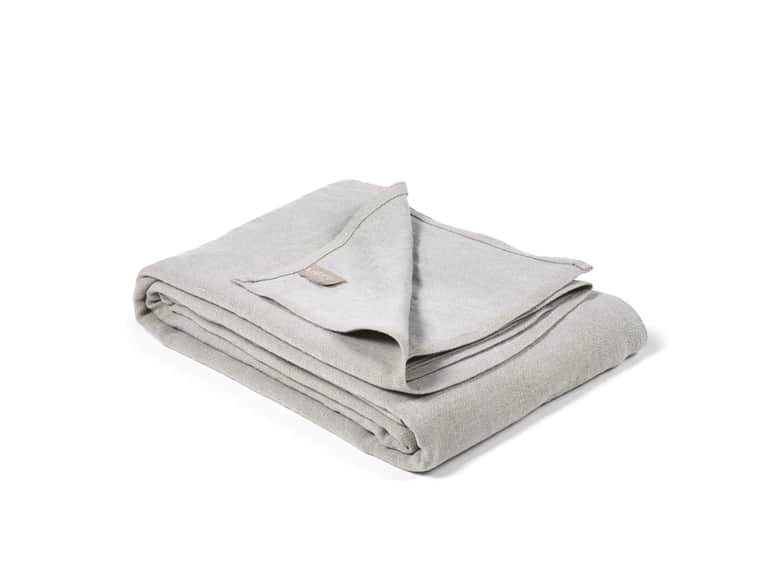
Linen begins as flax fiber. It can make a breathable, textured textile with a relaxed drape, and it may soften with use. Care requirements vary by product, so follow the manufacturer’s instructions rather than relying on assumptions about all linen. The Hudson Blanket, for example, is described as 100 percent linen made from European flax, with a stonewashed finish. That material composition makes it a plant-fiber option for adults’ bedding or for an appropriate supervised setting; it should not be treated as a loose covering for an infant’s sleep space.
Recycled cotton: another material pathway
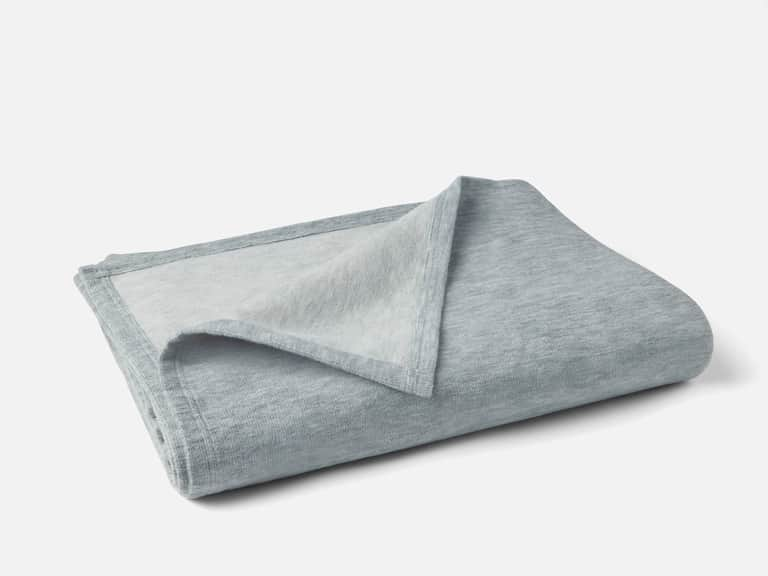
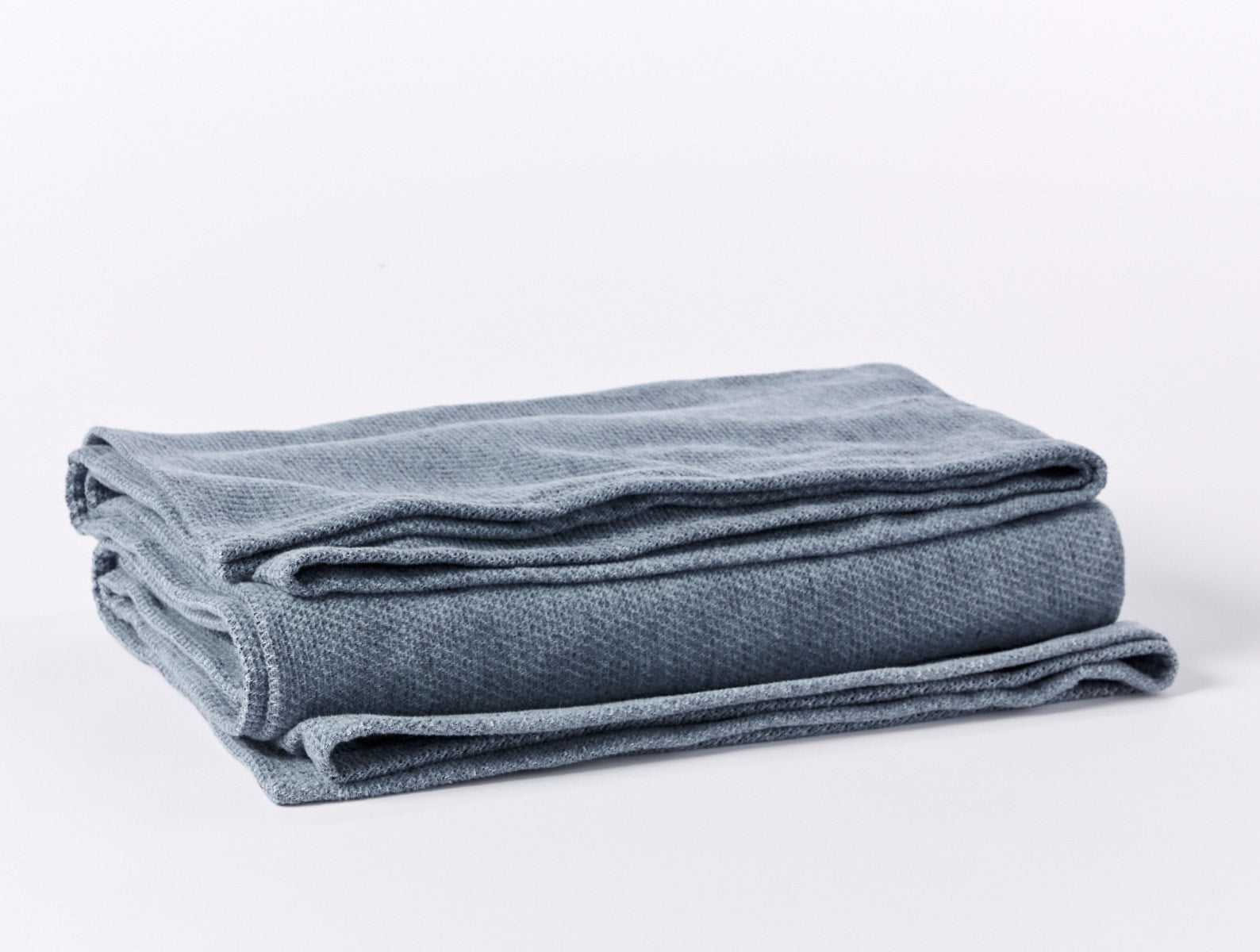
Recycled content can make a textile’s material story more circular by putting recovered fiber back into use. It is still important to check the percentage and the other materials in the blend. The Full Circle Recycled Cotton Blanket is listed as 52% recycled cotton and 48% organic cotton. Both fibers are plant-based, according to the product description. Its brushed finish and woven construction are details to weigh alongside the fiber content, care instructions and the setting in which you plan to use it.
Recycled does not mean impact-free, and the word alone does not explain where all fibers came from or how the finished item was processed. A verified recycled-content claim can add useful information, but should be considered alongside durability and likely use. A textile that remains in service for a long time may help avoid frequent replacement, though actual lifespan depends on how it is made, cared for and used.
Dyes, finishes and the details labels may omit
Fiber content is only one part of a textile’s composition. Color can come from dyes or pigments, and a fabric may receive finishes intended to change its feel, appearance or performance. Some products are described as stonewashed, brushed, prewashed, piece-dyed or treated. These terms tell you something about the textile’s process or surface, but they do not automatically establish that a product is vegan or that every chemical used is absent.
For a vegan-minded choice, ask whether a dye, finish, coating, adhesive or printed design uses animal-derived ingredients or processing aids. Not every manufacturer will have a detailed answer, but a clear materials disclosure is a useful sign of transparency. If a product makes a specific claim—such as being free from a named substance—look for the scope and basis of that claim rather than treating it as a general guarantee about the whole item.
Certifications can help, but each one has a defined purpose. Some relate to organic fiber production, some to recycled content, and others to restrictions on certain chemicals or manufacturing practices. A certification is not a universal stamp of “vegan,” “non-toxic” or “safe for every baby.” Check the certifier’s criteria and whether the certification applies to the fiber, the finished textile or a particular stage of production.
It is also reasonable to prioritize the details most relevant to your household. A caregiver may focus on confirmed plant-based components; another may give more weight to independent certification, low-impact production, durability or ease of washing. These priorities can overlap, but they are not interchangeable. Clear questions produce more useful comparisons than relying on a broad green or natural-sounding phrase.
Softness is not the same as suitability
A textile can feel exceptionally gentle in the hand and still be unsuitable for a particular use. Softness depends on more than fiber: yarn, knit or weave, brushing, washing and finishing all contribute. Likewise, breathability is influenced by fabric construction and weight, not merely by whether the fiber is cotton or linen. Product descriptions can offer clues, but a caregiver should not interpret claims about airflow or temperature regulation as proof that a blanket is safe for infant sleep.
For infants, safe-sleep recommendations take priority over preferences for a cozy-looking nursery. Keep loose blankets, pillows, quilts, soft toys and other soft objects out of an infant’s sleep space. Use a firm, flat sleep surface with a fitted sheet, and follow current guidance from trusted pediatric or public-health organizations. If a baby needs warmth, ask a qualified health professional about age-appropriate sleep clothing rather than adding loose bedding.
Blankets can still have useful roles outside the crib when an adult is actively supervising and following the product’s directions. A clean blanket might be used for a supervised cuddle or an appropriate floor activity, provided the baby is never left unattended and the textile does not obstruct breathing or create another hazard. Remove it before the baby sleeps. A product marketed for a nursery is not necessarily designed for unsupervised infant sleep.
These distinctions matter because a blanket’s name, size or intended audience can be confusing. “Baby blanket” describes a product category; it does not override safe-sleep advice. A soft, breathable, organic or vegan-friendly fabric remains loose bedding if placed in a crib or other infant sleep space.
A practical comparison checklist
When comparing vegan nursery textiles, use a simple sequence. It can help turn a crowded product page into a set of concrete questions:
- Identify every fiber. Check the outer fabric, fill, lining, trim and embellishments. Confirm that each component fits your definition of vegan.
- Look for blends. Note percentages rather than relying on the headline material. A cotton-rich blend is not the same as 100% cotton.
- Understand the claim. Distinguish plant-based, organic, recycled, certified and “natural.” Each describes something different.
- Check dyes and finishes. If these are important to your choice, look for specifics or ask the manufacturer instead of inferring from a color or texture.
- Read the care label. Consider whether the item can be cleaned in the way your routine requires. Follow the stated temperature and drying instructions.
- Inspect construction. Check seams, edging, loose threads, attached decoration and any small parts that could detach. Stop using a damaged textile.
- Match the item to its setting. Separate supervised-use textiles from products intended for a child’s bed at an age when bedding is appropriate.
- Keep sleep safety separate. Do not infer that a fabric is safe for a crib because it is breathable, organic, lightweight or designed for babies.
If you are shopping in person, feel the textile and inspect its edges, but use the label—not touch alone—to establish its composition. Online, compare the product’s full specifications and care details. When information conflicts between a listing and packaging, seek clarification before making a decision.
Washability, wear and everyday life
Nursery textiles encounter spills, milk, drool and the ordinary work of caregiving. Washability can therefore matter as much as first-touch softness. A blanket that requires dry cleaning may not suit a household looking for a frequently washed item. Another textile may be machine washable but require a gentle cycle, cold water or low heat. Follow the instructions supplied with the particular product; general advice about cotton or linen is not a substitute for its care label.
Before a textile enters regular use, check its care requirements and wash it as directed. Avoid improvised chemical treatments or added fragrances if these are not recommended by the manufacturer. Dry the item fully before storing it, and inspect it occasionally for weakened seams, unraveling edges or damaged trim. A well-maintained textile can remain useful for longer, while wear or loose components are reasons to stop using it around a child.
Care also shapes how a material choice works in real life. A caregiver who needs a blanket that can be washed often may choose differently from someone selecting a decorative throw for a chair. The best comparison is not an abstract contest between fibers; it is a match between a clearly described textile and its intended, safe use.
Making a values-led choice without chasing perfection
Vegan-friendly nursery textiles can be part of a thoughtful home, but they need not carry the burden of solving every environmental or safety question. Plant-based fibers have agricultural and manufacturing histories. Recycled material can help reuse resources, but its full impact depends on more than a percentage on a label. Organic certification can provide information about a standard without guaranteeing that a product is ideal for every family or every use.
A measured approach is often the most useful: choose a material that meets your ethical preference, look for transparent product details, make sure the care routine is realistic and buy for a defined purpose. If you already own a suitable textile, continuing to use it appropriately may be more practical than replacing it solely to pursue a new label. When choosing something new, durability and fit for purpose can matter alongside fiber origin.
For a baby’s room, the calmest choice is not necessarily the softest or most elaborately certified one. It is a choice made with a clear view of what a product contains, how it should be cared for and where it can safely be used. A plant-derived blanket can bring texture and comfort to a supervised moment; a fitted sheet belongs on the infant’s sleep surface. Keeping those roles distinct lets personal values and evidence-based safety guidance work together.
Questions caregivers often ask
Is cotton always vegan?
Cotton fiber comes from a plant, but a finished textile may include other materials in its blend, fill, trim or decoration. Check the full composition rather than relying on the word “cotton” in a product name.
Does organic mean vegan?
No. Organic describes a production standard for particular materials or processes; it does not by itself confirm that a product contains no animal-derived fibers or components. Read the materials list and certification details.
Can a breathable baby blanket go in a crib?
No. Breathability claims do not make loose bedding appropriate for an infant sleep space. Keep blankets and other soft objects out of the sleep area and follow current safe-sleep guidance.
What if the product page does not name its finishes?
Ask the manufacturer or seller for clarification if that information affects your decision. If it cannot be confirmed, choose whether the available information is sufficient for your household’s needs.