Nursery fabric guide
Understanding Wool Textiles for a Nursery: Warmth, Care, and Safe Use
Wool has a long history as a source of insulating, resilient fabric. In a nursery, though, a fiber’s reputation is only the beginning of the story. Weave, weight, finishing, cleaning needs, and—above all—the place where a textile will be used determine whether it is practical for family life.
Published November 28, 2026
Touch a wool textile and you meet a landscape of tiny structures. Individual fibers have a naturally crimped shape; spun and woven together, they form a fabric that can trap air and feel warm without necessarily being heavy. That combination has made wool useful in clothing and household textiles across climates. It can also make wool blankets and throws appealing in a nursery, where families often look for comfortable layers and materials that will last.
But “warm” is not the same as “right for every use.” A thick wool blanket, a light wool throw, and a small woven nursery accent are different objects with different functions. No material, label, or claim of breathability overrides safe-sleep guidance. For babies under 12 months, loose blankets and other soft items should be kept out of the sleep space. A bare, firm, flat sleep surface with a fitted sheet is the safer standard; follow current guidance from your pediatric care provider and public-health authorities.
This distinction is central to choosing wool nursery textiles: consider where an item belongs before considering how soft it feels. A blanket may be useful as a decorative layer over a chair, for supervised cuddling when an adult is holding the baby, or for an older child in an age-appropriate setting. It does not become safe for an infant’s crib because it is lightweight, natural, organic, or described as breathable.
What wool can—and cannot—tell you
Wool is a natural animal fiber, generally obtained from the fleece of sheep. The word on a product label describes a broad family rather than one uniform fabric. Wool can differ according to its source, fiber diameter, processing, yarn, weave, density, finish, and blend. Those choices shape how a textile feels, how much warmth it provides, how it drapes, and how it should be cleaned.
Wool’s crimp can help create pockets of still air within a textile, contributing to insulation. The fiber can also absorb moisture vapor, a characteristic often discussed in connection with comfort. These qualities may be useful in clothing and household layers, but they are not a guarantee that a baby will remain at a safe temperature. A room’s temperature, clothing, bedding, the child’s health, and the way a product is used all matter. A blanket’s material cannot regulate an infant’s body temperature reliably enough to replace careful clothing choices and safe-sleep practices.
Descriptions such as “temperature regulating,” “naturally breathable,” or “hypoallergenic” need careful reading. They may refer to a general fiber characteristic or a manufacturer’s product claim, not an individual baby’s response or proof of suitability for a particular use. People can have sensitivities to wool, lanolin, dyes, finishing agents, or dust and residues that collect in textiles. If a child has eczema, allergies, or other skin or respiratory concerns, ask a qualified clinician for advice tailored to the child.
In a nursery, wool may be considered for furnishings or for use outside an infant sleep space. Its practical value depends on the full textile and its intended setting—not simply on the word “wool.”
Read the construction, not just the fiber name
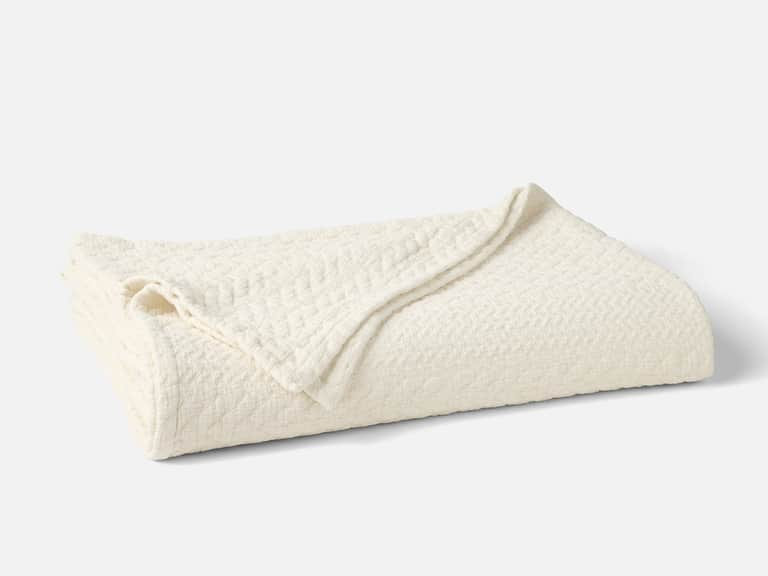
Two blankets made from 100% wool can have markedly different weight and performance. A dense, tightly woven fabric may feel substantial and hold a defined shape. A looser weave may feel more open and drape differently. Knits stretch; textured weaves add surface relief; brushed finishes can feel softer but may need gentler handling. Seams, hems, decorative stitching, fringe, and loose loops also affect durability and suitability around small children.
Weight is one useful clue, though it is not a safety rating. It may appear as grams per square metre (g/m²), ounces per square yard, or not at all. A higher figure often indicates more material per area, but fiber type and construction also influence how a textile feels. A lighter blanket is not automatically appropriate for an infant’s sleep space; safe-sleep recommendations still call for keeping loose blankets out of that space during the first year.
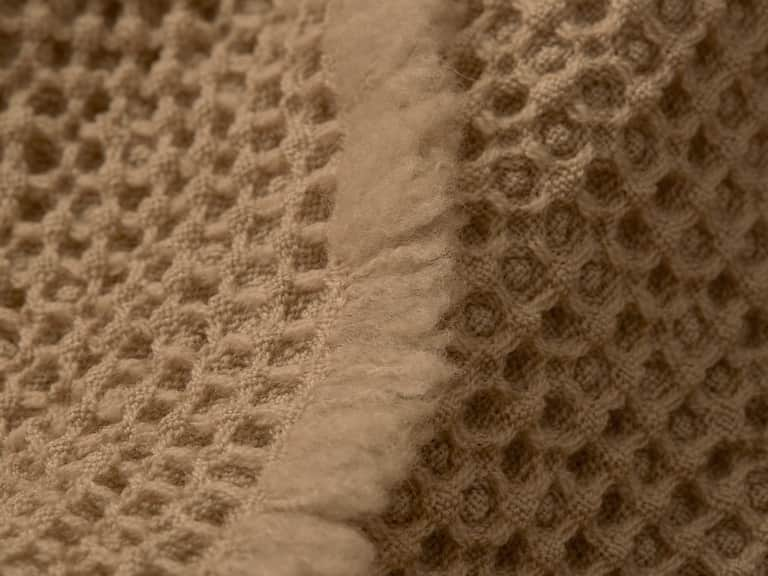
Consider weave and texture. A waffle weave creates a raised, three-dimensional surface; a smooth weave has a different feel and appearance. Textured fabrics can collect lint or catch on small objects, while open structures may snag more easily. Inspect edges and embellishments, especially if a textile will be within a young child’s reach during supervised awake time.
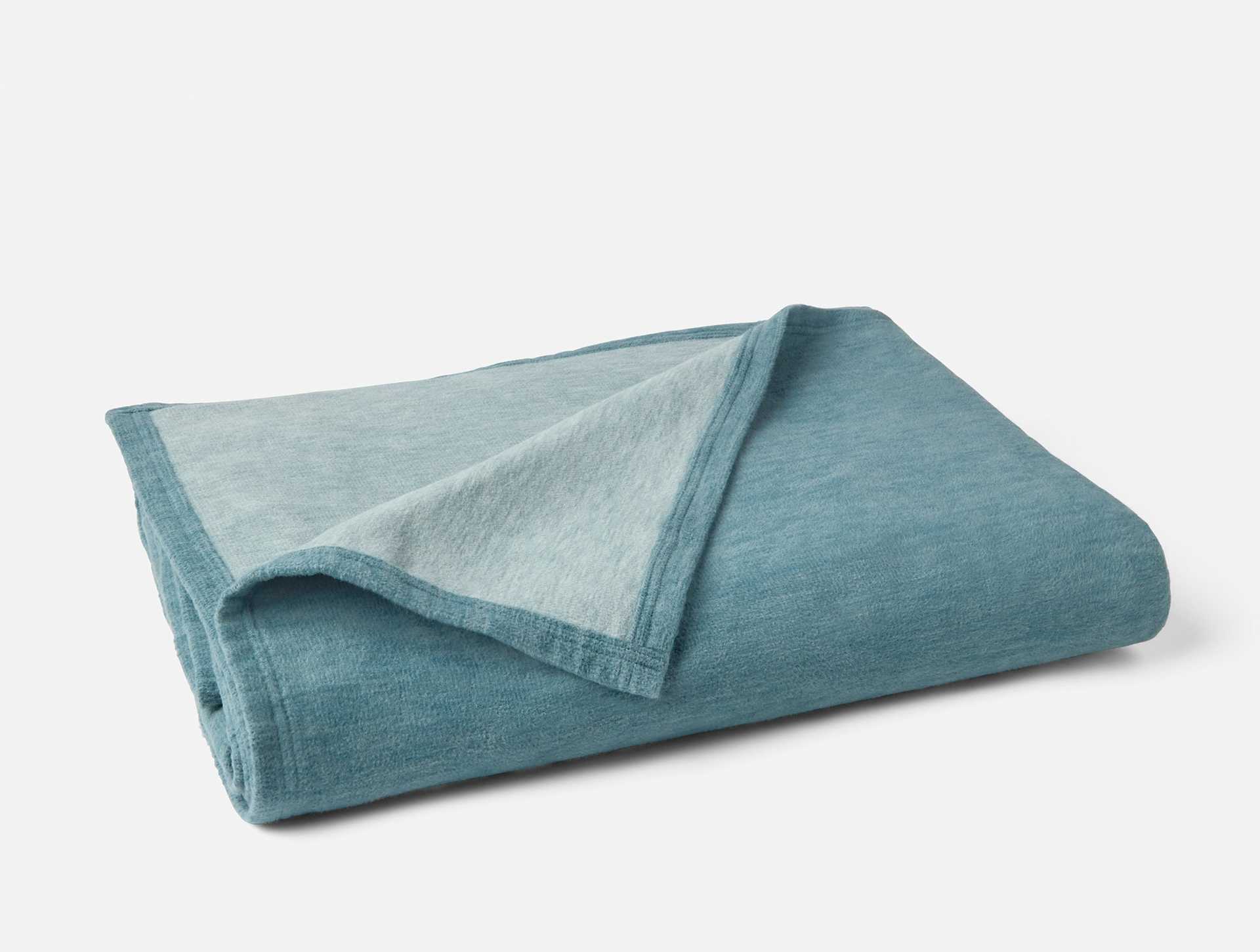
Consider finish and color. Garment dyeing, brushing, and other finishing processes influence appearance and handfeel. If a label lists dyes or treatments, review the information rather than assuming that natural fiber means no processing. Certification marks can help explain how a product was assessed, but they are not substitutes for reading the care label and checking the intended use. Look up the certifier and the scope of the particular certification if that distinction matters to your household.
Finally, check the exact fiber content. A product described as a wool blanket may contain other fibers, trims, or backing materials. Blends can change softness, care requirements, durability, and how the fabric responds to heat or moisture. Clear labeling should identify fiber percentages and provide usable care instructions.
A product label in context
The Nid Blanket illustrates how construction details can make a label more informative. Its description identifies 100% wool, a waffle weave, garment-dyed finish, and a weight of 300 g/m². Those details tell a reader more than the word “wool” alone: the fabric has a textured structure, and the listed weight gives a point of comparison with other textiles.
They do not, however, establish that the blanket is designed or approved for infant sleep. Product information describes it as a wool blanket, not as an infant sleep product. Families considering it for a nursery should treat it as a household textile for an appropriate setting—such as a decorative layer beyond the crib—and follow the product’s directions. Keep it, like all loose blankets, out of an infant’s sleep space.
This is a useful habit whenever you shop: separate a product’s material properties from its intended purpose. “Made from wool” answers one question. It does not answer whether an item is suitable for a baby, whether it can be washed at home, or whether it belongs near a sleeping infant.
Care that protects the fabric—and the household
Wool care varies. Some wool products are designed for machine washing on a gentle or wool cycle; others require hand washing, spot cleaning, or professional dry cleaning. The care label for the specific item takes precedence over generic advice. A blanket that looks similar to another may have a different yarn, finish, or construction and therefore need different treatment.
Before washing, check for loose stitching, snags, or areas that may need repair. Follow the stated water temperature and detergent guidance, and avoid bleach unless the maker explicitly permits it. Heat, agitation, and sudden changes in temperature can cause some wool fabrics to shrink, felt, or lose their shape. If the label recommends drying flat, support the textile rather than hanging it while wet, which can stretch the fabric. Keep it away from direct heat unless the care directions say otherwise.
Frequent laundering is part of life with a baby, so care demands matter at the point of purchase. Ask whether routine cleaning is realistic for the way a textile will be used. A blanket that requires specialist care may be better suited to occasional decorative use than to a role where spills and repeated washing are likely. Avoid assuming that a natural fiber is self-cleaning or that it never needs washing.
Store clean, thoroughly dry wool in a clean, dry place. Follow the manufacturer’s guidance for protecting it from pests, and inspect it before returning it to regular use. If an item becomes damp, soiled, damaged, or develops an odor, clean it according to its label and allow it to dry completely. Never place a loose blanket into a baby’s crib as a workaround for cold temperatures; adjust the baby’s clothing and sleep environment in line with professional safe-sleep guidance instead.
Safe use begins with the sleep space
For infants under 12 months, a clear sleep space is the defining rule. The American Academy of Pediatrics’ safe-sleep recommendations advise placing babies on their backs for every sleep on a firm, flat, non-inclined surface, with no soft objects or loose bedding in the sleep area. That means keeping blankets, pillows, quilts, comforters, and plush toys out of the crib or bassinet. Use a fitted sheet made for the sleep surface and follow the product instructions for the crib, bassinet, or play yard.
For warmth, caregivers can use appropriately sized sleep clothing or a wearable blanket designed for infant sleep, following its instructions and avoiding overheating. A wearable product is not the same as a loose blanket. Check the baby and the environment rather than relying on a textile’s advertised thermal qualities; ask a pediatric professional if you are unsure what clothing is appropriate for your baby or room conditions.
Do not swaddle a baby who shows signs of trying to roll. If swaddling is used, follow current pediatric guidance and the swaddle product’s directions, keeping the baby on their back and ensuring the hips can move freely. Stop swaddling when rolling attempts begin. A loose blanket should not be used to secure a swaddle or added over a wearable sleep garment.
When a wool blanket is used during supervised awake time, an adult should remain attentive and keep the fabric away from the baby’s face. Do not leave a baby unattended on a sofa, adult bed, changing surface, or other raised area with a blanket; falls and entrapment are hazards regardless of fiber. Remove the textile from the immediate area when the activity ends, and return the baby to an appropriate, clear sleep space if they become drowsy.
Guidance can change, and recommendations may differ by country. Consult current advice from your national public-health service and your child’s healthcare professional. If a product’s intended age or use is unclear, contact its manufacturer rather than guessing.
Choosing wool for a nursery: a practical checklist
- Define the use first. Decide whether the textile is decor, a supervised-use item, or a sleep product. Do not use a loose blanket in an infant’s sleep space.
- Read the full fiber label. Confirm the wool percentage, any additional fibers, and the materials used for backing, lining, or trim.
- Inspect construction. Look at weave, weight, edge finish, seams, loose loops, fringe, and any detachable or decorative parts.
- Check care instructions. Match the cleaning requirements to your household’s routines and the likelihood of spills or frequent washing.
- Consider individual sensitivities. If the baby has skin, allergy, or respiratory concerns, seek medical guidance rather than relying on broad “hypoallergenic” language.
- Review claims carefully. Understand what certifications cover, and do not treat organic, natural, or breathable claims as a statement of infant sleep safety.
- Keep the sleep area simple. For a baby under 12 months, use a firm, flat sleep surface with a fitted sheet and no loose bedding or soft objects.
A label is a map, not the whole terrain. It gives clues about composition and care, while the household’s needs and the child’s age determine how an item should be used.
Questions parents often ask
Is wool naturally temperature regulating?
Wool’s structure can contribute to insulation and moisture handling, but no textile can guarantee that a baby will stay at a safe temperature. Clothing, room conditions, health, and use all matter. Follow pediatric guidance and do not use a wool blanket as infant crib bedding.
Can a wool blanket go in a crib if it is very light?
No. A lightweight or breathable loose blanket is still loose bedding. For babies under 12 months, keep blankets and other soft items out of the sleep space and use only the sleep essentials recommended by current safe-sleep guidance.
Does “natural” mean a textile cannot irritate skin?
No. Individual responses vary, and a finished textile may include dyes, treatments, blends, or residues. If you notice a reaction or have concerns about a known sensitivity, stop using the item and consult a healthcare professional.
Is machine-washable wool always easy to care for?
Not necessarily. “Machine washable” may come with specific temperature, cycle, detergent, and drying instructions. Follow the care label exactly, and check whether the item can tolerate the kind of cleaning its intended use will require.
A thoughtful place for wool
Wool’s warmth and varied textures can make it an appealing nursery material, especially for a carefully chosen household layer or decorative accent. Its usefulness depends on the particular fiber, weave, finish, and care needs. Reading those details helps families judge whether a textile suits their routines, while keeping expectations realistic about what a material can do.
The most important decision is simpler than the science of fibers: keep loose textiles out of an infant’s sleep space. A wool blanket may have a place in the room, but not in the crib of a baby under 12 months. Clear sleep surfaces, age-appropriate clothing, and current professional guidance remain the foundation of safer infant sleep.